Louisiana Paycheck Calculator
Calculate your Louisiana paycheck instantly using the latest 2026 federal and state tax rates.
Inputs
Pre-Tax Deductions
After-Tax (Post-Tax) Deductions
Bonuses & Overrides
Results Summary
Pay Period Equivalences
| Interval | Net Amount |
|---|---|
| Annual | $0.00 |
| Monthly | $0.00 |
| Semi-Monthly | $0.00 |
| Biweekly | $0.00 |
| Weekly | $0.00 |
| Daily | $0.00 |
| Hourly | $0.00 |
Federal Income Tax
Federal income tax is a progressive tax withheld from your earnings based on IRS tax brackets. Your tax rate increases as your taxable income exceeds predetermined thresholds.
State Income Tax
State income tax is levied by individual state governments. Depending on the state, it can be a flat rate, a progressive scale, or zero.
Social Security
Social Security tax is a federal payroll tax under FICA that funds the retirement and disability benefits program. It is withheld at a flat 6.20% rate up to the annual limit.
Medicare
Medicare tax is withheld at a base rate of 1.45% under FICA to fund hospital insurance benefits. High earners face an additional 0.9% surtax on wages over $200k.
Pre-Tax Deductions
Pre-tax deductions (e.g. standard 401k, HSA, FSA, health premium payments) are taken from gross wages before taxes are calculated, lowering your overall tax bill.
After-Tax Deductions
After-tax deductions (e.g. Roth 401k, life insurance, union dues, charity) occur after tax withholdings are processed and do not reduce taxable wages.
Louisiana Paycheck Calculator: Estimate Your Take-Home Pay with Confidence
Understanding your paycheck is essential whether you're starting a new job, negotiating a salary, or planning your monthly budget. A Louisiana Paycheck Calculator helps employees estimate their take-home pay after taxes and deductions. Instead of guessing how much you'll receive on payday, you can use a paycheck calculator to get a reliable estimate based on your income, filing status, and deductions.
Whether you're a full-time employee, part-time worker, hourly employee, or salaried professional, knowing how payroll taxes affect your earnings can help you make informed financial decisions.
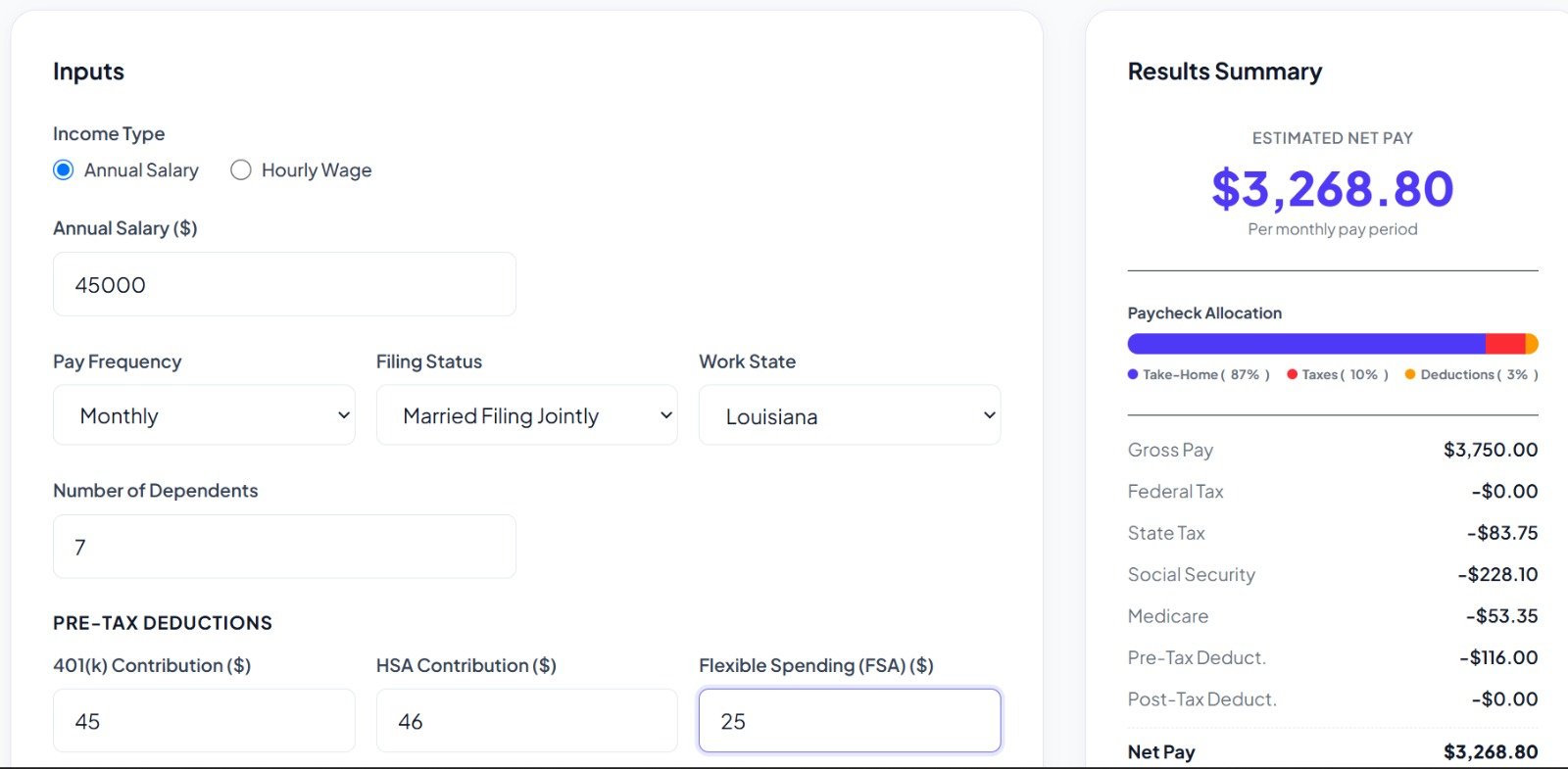
In this comprehensive guide, we'll explain how a Louisiana Paycheck Calculator works, what taxes are deducted from your paycheck, and how you can maximize your take-home income.
What Is a Louisiana Paycheck Calculator?
A Louisiana Paycheck Calculator is an online tool that estimates your net pay after deducting federal taxes, Louisiana state income tax, Social Security, Medicare, and any voluntary deductions such as health insurance or retirement contributions.
The calculator provides an estimate of:
- Gross pay
- Federal income tax withholding
- Louisiana state income tax
- Social Security tax
- Medicare tax
- Retirement deductions
- Health insurance deductions
- Other payroll deductions
- Net pay (take-home salary)
This allows employees to understand exactly where their money goes every pay period.
Why Use a Louisiana Paycheck Calculator?
Many workers only focus on their annual salary without realizing that deductions significantly affect their actual paycheck.
Using a paycheck calculator helps you:
- Estimate take-home pay before accepting a job
- Compare salary offers
- Budget monthly expenses
- Plan savings goals
- Calculate overtime earnings
- Estimate bonuses
- Understand payroll deductions
- Prepare for tax season
It's an essential financial planning tool for every Louisiana employee.
How Payroll Works in Louisiana
Employers calculate payroll by starting with an employee's gross wages.
Gross wages include:
- Hourly wages
- Salary
- Overtime
- Bonuses
- Commissions
- Holiday pay
- Paid time off
From gross income, employers subtract mandatory and voluntary deductions before issuing the final paycheck.
The remaining amount is called net pay or take-home pay.
Understanding Gross Pay
Gross pay is the total amount earned before taxes and deductions.
For hourly workers:
Gross Pay = Hours Worked × Hourly Rate
Example:
- Hourly wage: $24
- Hours worked: 40
Gross Pay:
40 × $24 = $960
If overtime applies, overtime earnings are added to gross wages.
Salary Employees
For salaried workers:
Annual Salary ÷ Number of Pay Periods = Gross Pay Per Paycheck
Example:
Annual salary:
$70,000
Biweekly payroll (26 pay periods)
Gross paycheck:
$70,000 ÷ 26 = $2,692.31
Federal Income Tax
Federal income tax is withheld based on:
- Filing status
- Annual earnings
- IRS Form W-4
- Additional withholding requests
- Tax credits
The amount withheld varies from employee to employee.
Louisiana State Income Tax
Louisiana collects state income tax from most employees.
The amount withheld depends on:
- Taxable wages
- Filing status
- State withholding allowances
- Current tax brackets
Your employer withholds state income tax automatically unless exempt.
Social Security Tax
Nearly all employees pay Social Security tax.
Current rate:
6.2% of eligible wages.
Employers match this contribution, making the total contribution higher.
Medicare Tax
Employees also contribute to Medicare.
Current rate:
1.45% of taxable earnings.
Higher-income earners may owe an additional Medicare tax depending on federal requirements.
Voluntary Payroll Deductions
Many employees have deductions beyond taxes.
These may include:
- Health insurance
- Dental insurance
- Vision insurance
- Flexible Spending Accounts (FSA)
- Health Savings Accounts (HSA)
- Life insurance
- Disability insurance
- Retirement plans
- Union dues
These deductions affect take-home pay.
Retirement Contributions
Contributing to retirement plans can reduce taxable income while helping build long-term savings.
Common plans include:
- 401(k)
- 403(b)
- IRA contributions (where applicable)
Increasing retirement contributions often lowers current taxable income.
Health Insurance Deductions
Employer-sponsored health insurance premiums are typically deducted directly from paychecks.
These deductions may be:
- Weekly
- Biweekly
- Semi-monthly
- Monthly
The deduction amount depends on the selected insurance plan.
Pay Frequency Matters
Your paycheck amount changes depending on payroll schedule.
Common payroll frequencies include:
- Weekly
- Biweekly
- Semi-monthly
- Monthly
Although annual earnings stay the same, individual paycheck amounts vary based on how often you're paid.
Hourly vs Salaried Employees
Hourly employees:
- Paid based on hours worked
- Eligible for overtime in many cases
- Income varies
Salaried employees:
- Fixed annual compensation
- Consistent paychecks
- Overtime rules vary depending on job classification
A paycheck calculator works for both.
Overtime Pay in Louisiana
Federal labor law generally requires eligible employees to receive overtime pay after 40 hours in a workweek.
Standard overtime:
1.5 times the regular hourly rate.
Example:
Regular wage:
$20/hour
Overtime wage:
$30/hour
Working overtime increases gross wages but may also increase tax withholding.
Bonuses and Commissions
Many Louisiana workers receive:
- Performance bonuses
- Holiday bonuses
- Sales commissions
- Incentives
These earnings are generally taxable and increase overall payroll deductions.
Pre-Tax vs After-Tax Deductions
Pre-tax deductions reduce taxable income.
Examples:
- Health insurance
- Traditional 401(k)
- HSA
- FSA
After-tax deductions include:
- Roth retirement contributions
- Wage garnishments
- Certain insurance products
Knowing the difference helps estimate take-home pay more accurately.
How to Use a Louisiana Paycheck Calculator
Most paycheck calculators require the following information:
- Pay frequency
- Hourly wage or annual salary
- Hours worked
- Filing status
- State
- Number of dependents
- Retirement deductions
- Health insurance deductions
- Additional withholding
The calculator estimates your net paycheck instantly.
Who Should Use a Louisiana Paycheck Calculator?
This tool benefits:
- Employees
- Employers
- HR departments
- Payroll specialists
- Freelancers estimating payroll jobs
- Job seekers
- College graduates
- Seasonal workers
- Part-time employees
Anyone receiving wages can benefit from understanding payroll deductions.
Budgeting with Your Take-Home Pay
Knowing your net income helps create realistic budgets.
Use your paycheck estimate to plan:
- Housing
- Utilities
- Transportation
- Groceries
- Savings
- Emergency fund
- Debt payments
- Entertainment
Budgeting based on take-home pay is more practical than using gross salary.
Job Offer Comparisons
Two job offers with similar salaries may produce different take-home pay depending on:
- Benefits
- Retirement plans
- Insurance costs
- Bonus structure
- Payroll deductions
Using a paycheck calculator makes comparisons easier.
Financial Planning
A Louisiana Paycheck Calculator supports financial planning by helping you:
- Save for retirement
- Build emergency savings
- Estimate annual income
- Plan vacations
- Prepare for large purchases
- Avoid overspending
Understanding your paycheck improves financial confidence.
Common Payroll Mistakes
Employees often misunderstand:
- Tax withholding
- Overtime calculations
- Benefit deductions
- Retirement contributions
- Bonus taxation
- Pay frequency
A paycheck calculator helps reduce confusion.
Benefits for Employers
Employers can also use paycheck calculators to:
- Estimate payroll costs
- Verify employee earnings
- Prepare compensation packages
- Improve payroll accuracy
- Answer employee payroll questions
Tips to Increase Take-Home Pay
While taxes cannot always be avoided, employees may improve net income by:
- Reviewing W-4 withholding
- Maximizing pre-tax retirement contributions
- Using employer health benefits
- Taking advantage of HSA or FSA accounts
- Monitoring overtime opportunities
- Reviewing payroll deductions regularly
Frequently Asked Questions
What is a Louisiana Paycheck Calculator?
It is an online tool that estimates your take-home pay after federal taxes, Louisiana state income tax, Social Security, Medicare, and other payroll deductions.
Is the paycheck calculator accurate?
Most paycheck calculators provide reliable estimates when accurate salary, tax, and deduction information is entered. Actual paychecks may differ slightly based on employer payroll systems.
Does Louisiana have state income tax?
Yes. Louisiana generally requires employees to pay state income tax based on taxable income and applicable tax rates.
Can hourly workers use a paycheck calculator?
Yes. Hourly employees can estimate their paycheck by entering their hourly wage, hours worked, overtime hours, and deductions.
Can salaried employees use it?
Absolutely. Salaried employees can estimate each paycheck by entering their annual salary and pay frequency.
Does overtime affect taxes?
Yes. Overtime increases gross earnings, which may increase tax withholding for that pay period.
Are bonuses included?
Yes. Most paycheck calculators allow bonuses and supplemental income to be included when estimating take-home pay.
What information do I need?
Typically you'll need:
- Annual salary or hourly wage
- Pay frequency
- Filing status
- State
- Hours worked
- Retirement deductions
- Insurance deductions
- Additional withholding
Why is my paycheck smaller than expected?
Your paycheck may be reduced because of:
- Federal taxes
- Louisiana state tax
- Social Security
- Medicare
- Retirement contributions
- Health insurance premiums
- Other voluntary deductions
Can a paycheck calculator replace professional tax advice?
No. A paycheck calculator provides estimates only. For tax planning, filing assistance, or complex financial situations, consult a qualified tax professional or accountant.
Final Thoughts
A Louisiana Paycheck Calculator is a valuable financial tool for anyone earning wages in the state. By estimating your take-home pay, you can better understand payroll deductions, compare job offers, create accurate budgets, and plan for future financial goals. Whether you're paid hourly or receive a fixed salary, using a paycheck calculator regularly helps you stay informed about your earnings and avoid surprises on payday. While the results are estimates, they provide an excellent starting point for managing your finances with greater confidence and making smarter employment and budgeting decisions.